



laminador en frío de 6 high
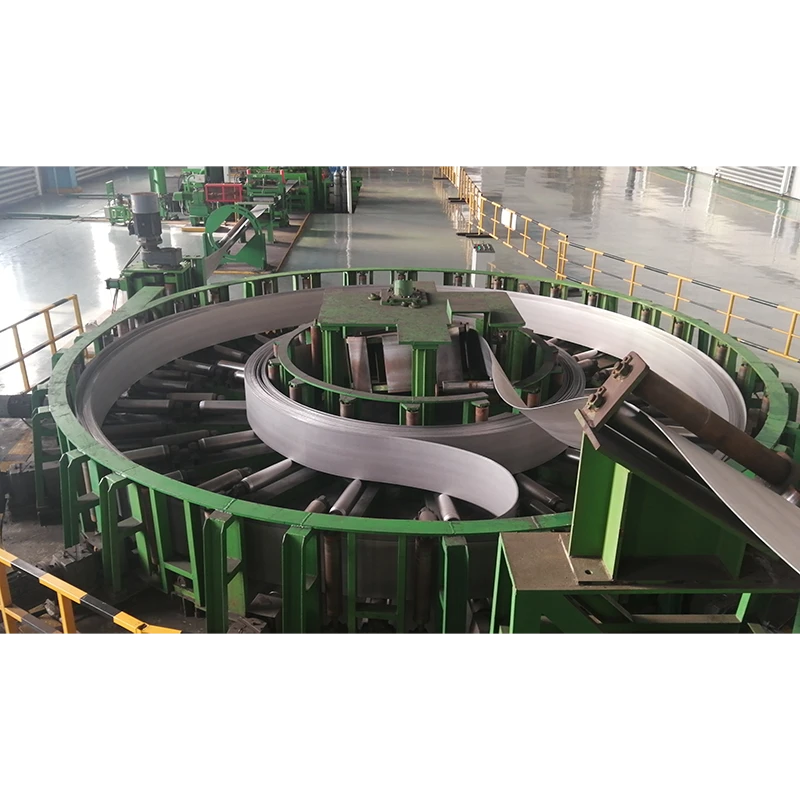
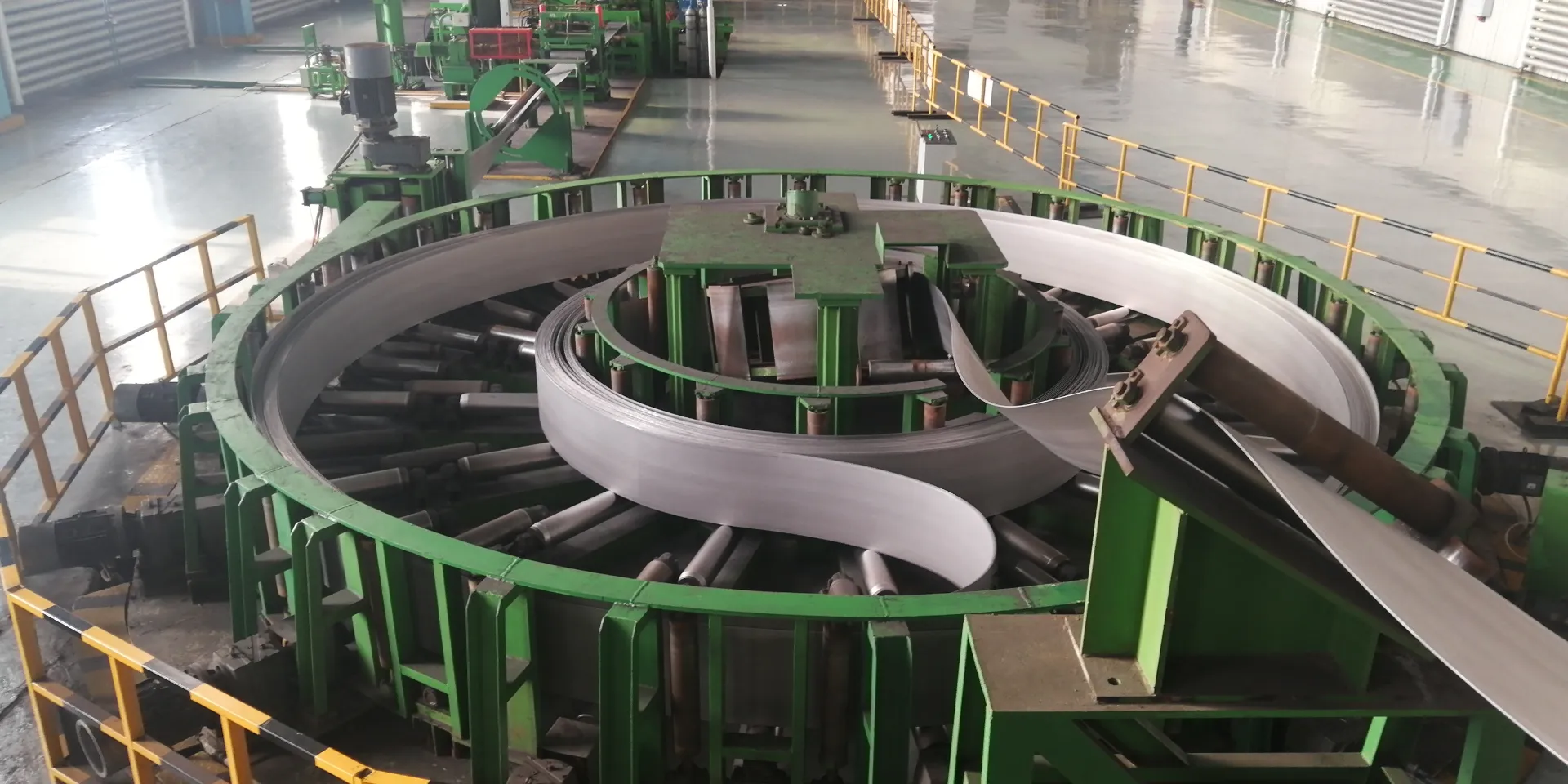
The Cold Rolling Process Understanding the 6-Hi Mill Configuration The cold rolling process is a vital industrial technique used to reduce the thickness of metal sheets and strips, enhancing their mechanical properties and surface finish. Among various mill configurations, the 6-high (6-Hi) rolling mill is particularly noteworthy due to its unique design and capabilities. This article delves into the intricacies of the cold rolling process, focusing on the 6-Hi mill configuration. Overview of the Cold Rolling Process Cold rolling is performed at room temperature, which distinguishes it from hot rolling, where operations occur above the metal's recrystallization temperature. The primary objective of cold rolling is to improve the strength and hardness of metals through strain hardening while achieving a desired surface quality. In this process, the raw metal is fed through a pair of rolls, exerting considerable pressure to deform the material. The thickness reduction typically ranges from a few millimeters to micrometers, producing thinner, stronger, and more uniform materials. Common metals processed through cold rolling include stainless steel, aluminum, copper, and various alloys. The 6-Hi Mill Configuration The 6-high mill configuration consists of six rolls two work rolls, two intermediate rolls, and two backup rolls. This setup effectively enhances the rolling process, allowing for thick materials to be processed into thinner gauges with high precision. 1. Work Rolls The two primary rolls that come into direct contact with the metal strip. Their role is to apply the majority of the force needed for deformation. The work rolls have a smaller diameter to ensure a higher surface pressure on the metal being processed. 2. Intermediate Rolls These rolls are positioned between the work rolls and serve to reduce the deflection of the work rolls. Their primary function is to maintain the stability of the work rolls during operation, allowing for consistent thickness across the material. 3. Backup Rolls The two larger rolls that support the work and intermediate rolls . They bear the loads exerted by the rolling process, minimizing the overall deflection of the work rolls and maintaining a closer control of the rolling gap. Advantages of the 6-Hi Configuration proceso de laminador en frío 6 hi The 6-Hi mill offers several distinct advantages over other rolling mill configurations, particularly the 4-high mills - Reduced Roll Deflection The inclusion of intermediate rolls significantly diminishes the deflection of the work rolls, ensuring better control over the final thickness and enhancing uniformity in the rolled product. - High Strength Materials The 6-Hi mill can handle higher strength materials due to the reduced roll deflection, making it ideal for producing ultra-thin strips from challenging materials. - Improved Surface Quality The precise control afforded by the 6-Hi design translates to superior surface finishes, which is critical for applications demanding aesthetic and functional quality, such as in the automotive and electronics industries. - Versatility The 6-Hi configuration is adept at processing a wide range of materials and thicknesses, making it suitable for various industries including automotive, aerospace, and packaging. Technological Advancements Recent innovations in cold rolling technology have further enhanced the capability of 6-Hi mills. Automated systems for precise control of roll position and pressure have become commonplace, leading to increased efficiency and reduced labor costs. Moreover, advancements in quality control and monitoring systems enable real-time feedback, ensuring that product specifications are met consistently. Additionally, the integration of advanced materials and improved lubrication systems has reduced wear and tear on mill components, enhancing longevity and reliability. Conclusion The cold rolling process, particularly utilizing the 6-high mill configuration, represents a crucial method in metal manufacturing. The capability to produce high-quality, thin metal sheets with reduced deflection and improved surface finish makes 6-Hi mills an invaluable asset within various industrial sectors. As technology continues to advance, the role of cold rolling in meeting the demands of modern manufacturing will only become more significant, ensuring that industries can produce materials that meet the rigorous specifications of tomorrow's applications.

We have successfully executed over 500
projects around the world,
many first-of-their-kind
research projects and products in China, including
We have successfully executed over 500
projects around the world,
many first-of-their-kind
research projects and products in China, including
-
2004
The 1st hydraulic AGC system for hot rolling of ribbon steel
-
2006
The 1st AFC system used for 1450mm skin pass mill
-
2009
The 1st 5-stand tandem line with 2-stand POR & Uncoiler for 650mm ribbon steel
-
2012
The 1st reversing mill for 1380mm strip
-
2016
The 1st soft-rolling system used in skin pass mill
-
2019
The 1st fully automated medium-width tandem cold rolling mill
-
2021
The 1st 5000KN Twin-stand double skin pass mill
-
2022
The 1st coupled pickling line & tandem cold mill with two modes - big roller & small roller
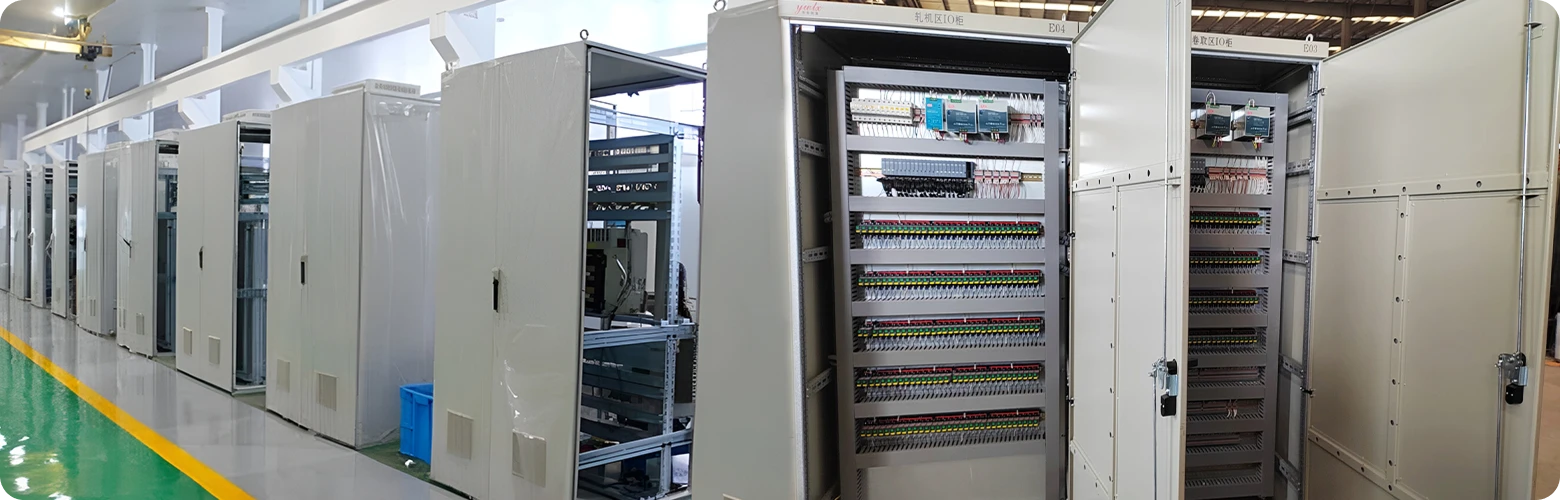
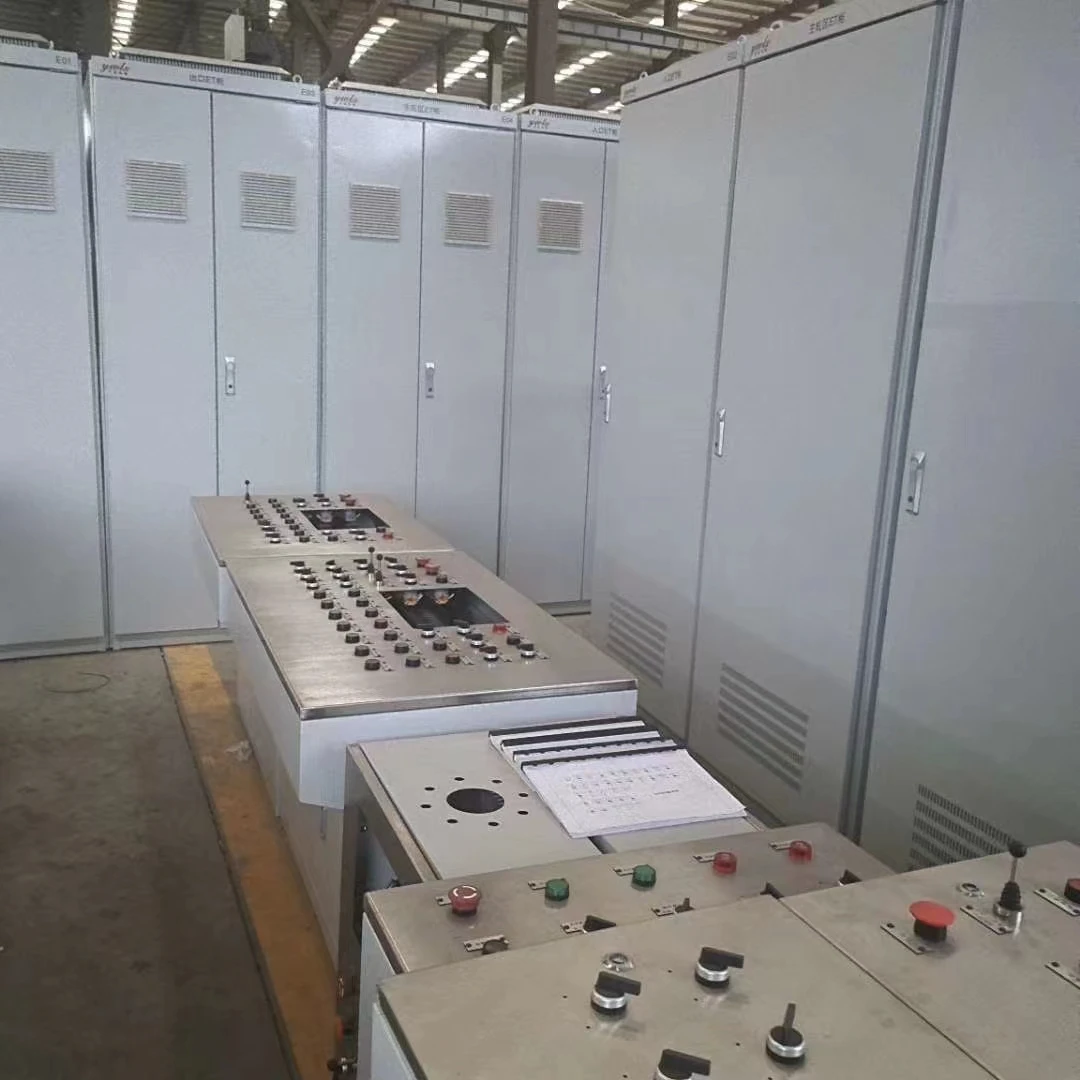
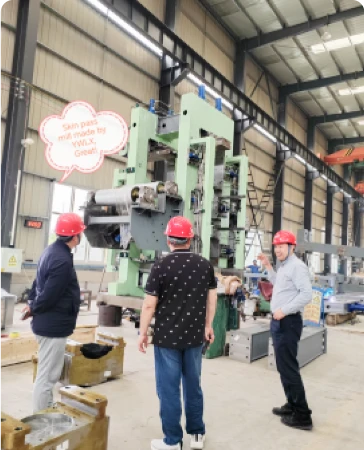
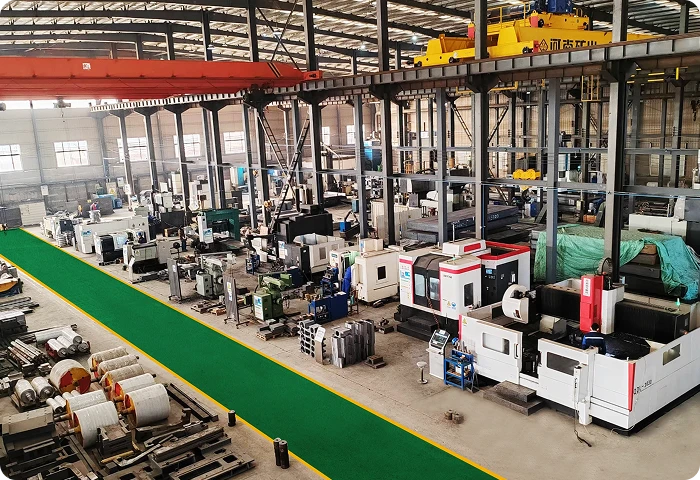
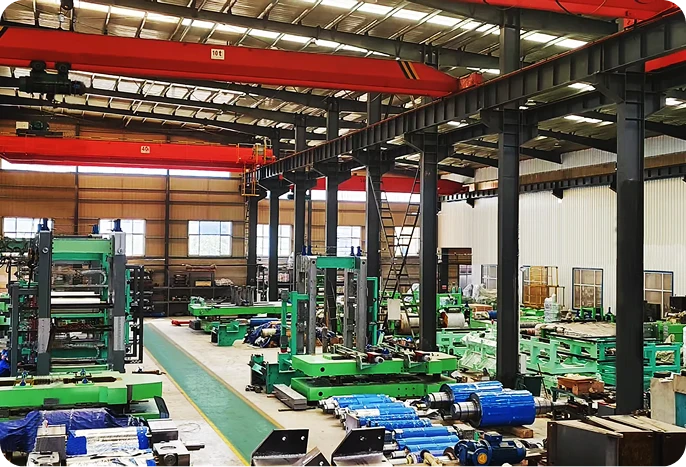
Yang Wang Li Xin operates a state-of-the-art facility over 66,000 square meters,and our manufacturing facility is fully equipped with high-tech machinery and high-capacity cranes. This enables us to handle large work pieces measuring 4.5m in width, 10m in length, and 1.5m in height, guaranteeing our capacity to produce 1800mm skin-pass mills and 1450mm rolling mills. The individual piece can weigh up to 100 tons.


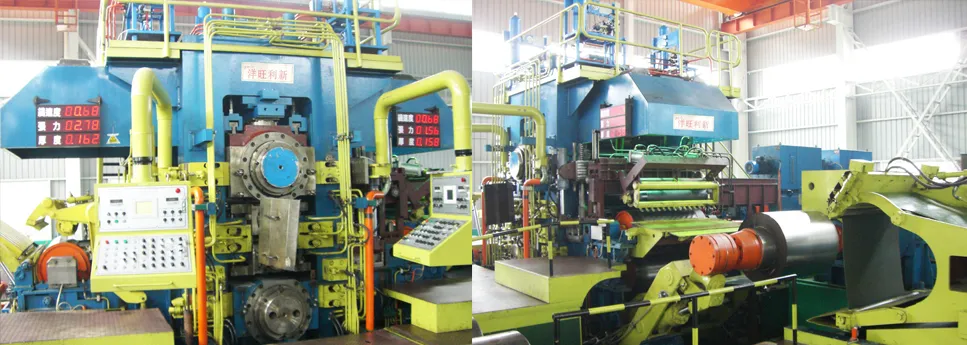
Quality is fundamental to the enterprise survival. We have established a comprehensive and meticulous quality management system and have successfully obtained ISO14000 certification. Starting from the design source, it supervises the entire production cycle, including design, procurement, processing, assembly, in-factory testing, installation, and online commissioning. The workshop is equipped with measuring tools like vernier calipers, spectrometers, hardness testers, and ultrasonic flaw detectors. They are used to check materials and control tolerances to ensure the final equipment meets or exceeds requirements. All products have a unique code, This enables the easy identification and traceability of the equipment components and ensures full control of quality.


-
 лазердин платформасыLaserplattierungsverfahren, же лазер түспөлдөө процесси, азыркы замангы материалдарды кайра иштетүүнүн бардык тармактарында, өзгөчө металлургияда жана механизмдерди оңдоп-түзөөгө байланыштуу техникалык чөйрөлөрдө кеңири колдонулат. Бул ыкманы колдонуу аркылуу, ар түрдүү материалдардын бетинде катмары жок же начар болгон жерлерди бекитүүгө, же кайрадан курамын түзүүгө мүмкүнчүлүктөр пайда болот. Ла
 -
 Cladding Rolling Mill - Beijing Yang Wang Li Xin Sci&Tech Co.,Ltd. | Cold Rolling Technology, Energy EfficiencyIntroduction The Cladding Rolling Mill represents a significant advancement in metal bonding technology, offering a sustainable and efficient solution for industries requiring high-quality bimetallic or triple-metal products. Developed by Beijing Yang Wang Li Xin Sci&Tech Co.,Ltd. , this technology addresses the limitations of traditional methods like explosive cladding and hot rolling, providing
 -
 قطعات یدکی جک ترولی هیدرولیکThe Importance of Spare Parts for Hydraulic Trolley Jacks Hydraulic trolley jacks are essential tools used in various industries, from automotive repair to heavy machinery maintenance. Their ability to lift heavy loads with ease makes them invaluable for both professional mechanics and DIY enthusiasts. However, like any mechanical device, these jacks can suffer wear and tear over time. This is whe


